01 · Design
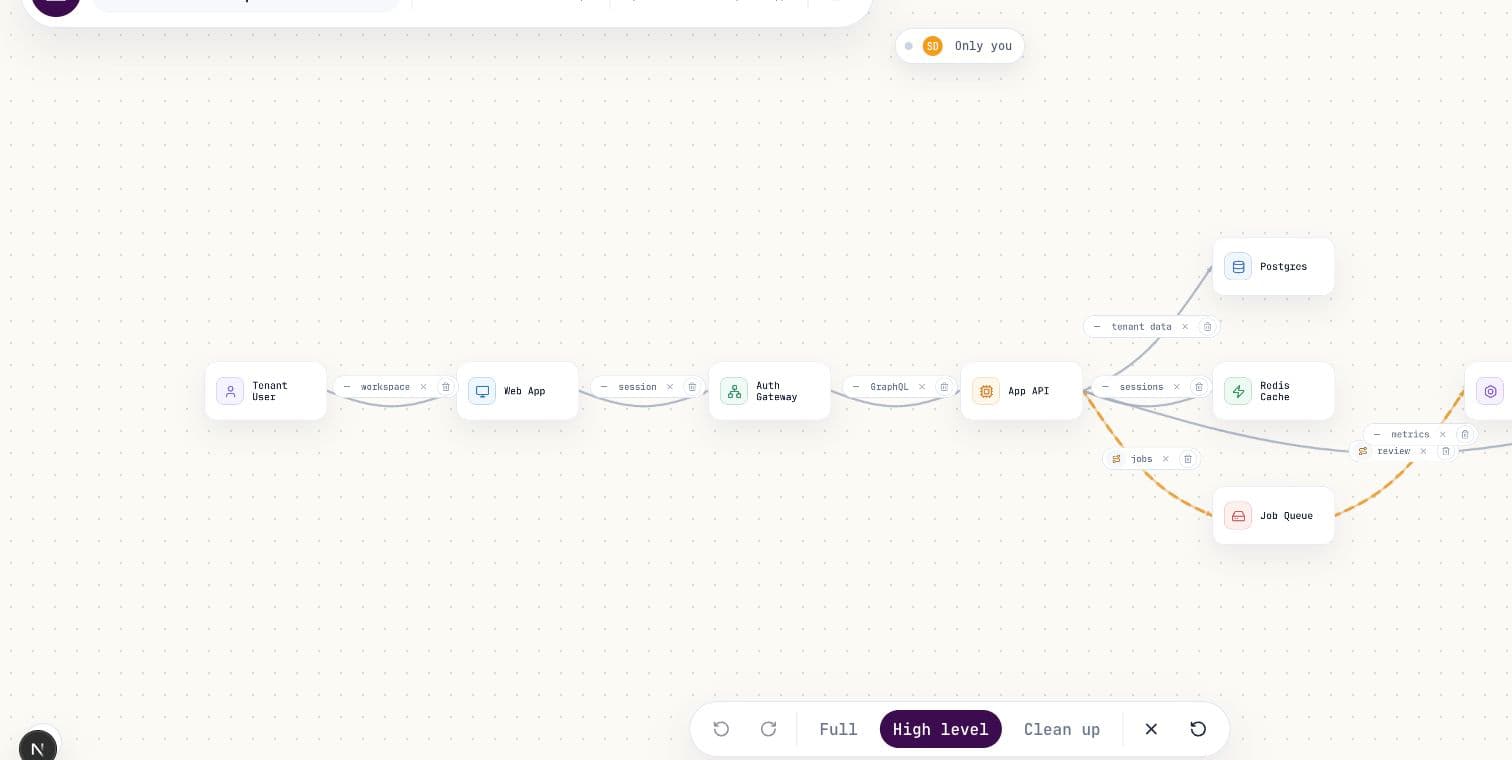
The architecture, captured as typed truth.
Available today — the canvas and the control plane.
The AI-driven development lifecycle
Stackplane makes your architecture the control surface for the AI development lifecycle. Agents build against a system you designed — and every unit of their work is scoped, reviewed, and attributed. The governance and accounting a real org needs, not another copilot.
Why now
How it works
Three things make an AI development lifecycle you can actually run: a system agents can reason about, a governed team to do the work, and a record of everything they did.
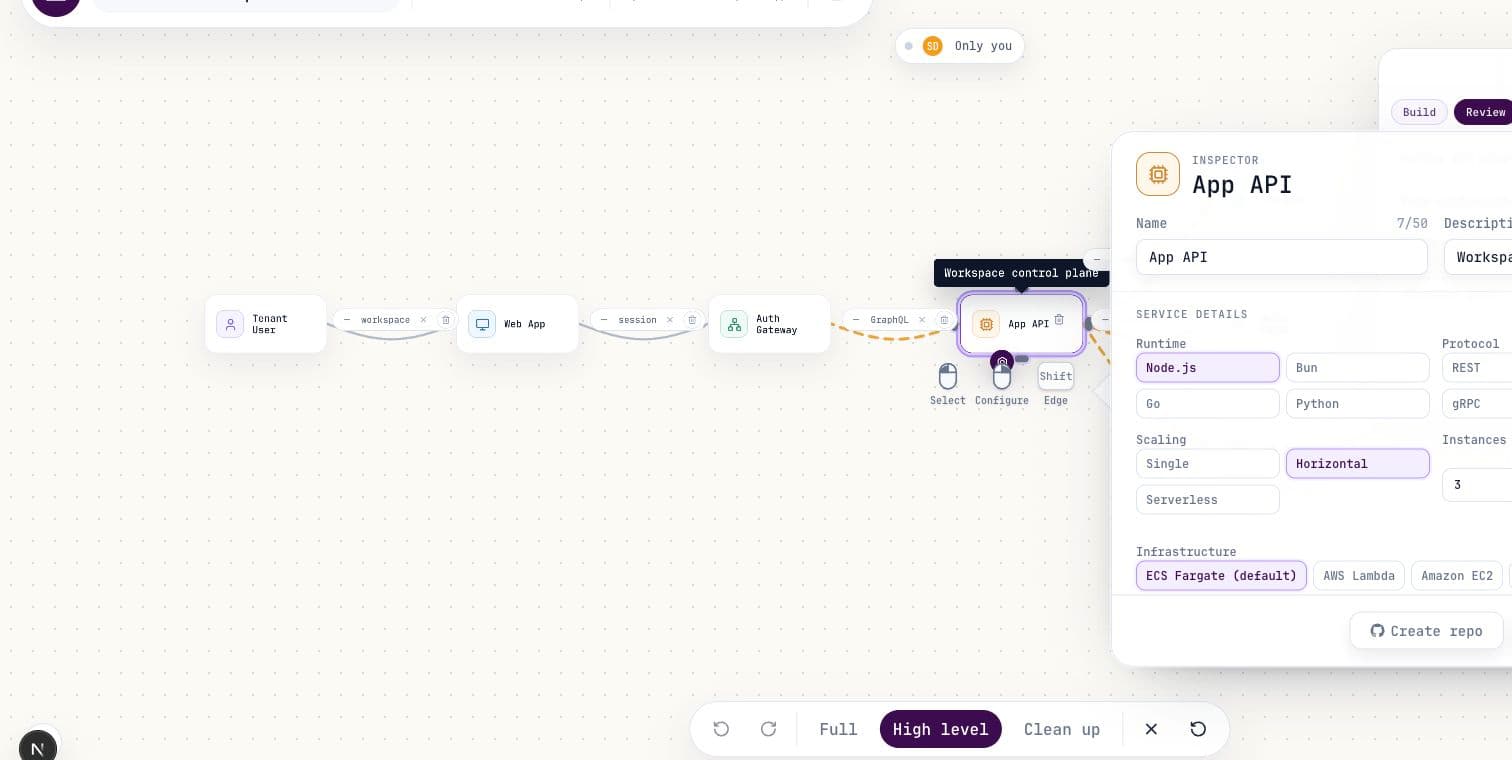
Stackplane captures your system as typed engineering decisions — runtime, protocol, scaling, data durability, delivery semantics — not a drawing. Agents build against that, not a blank prompt.
A machine-readable model of the system, not a diagram.
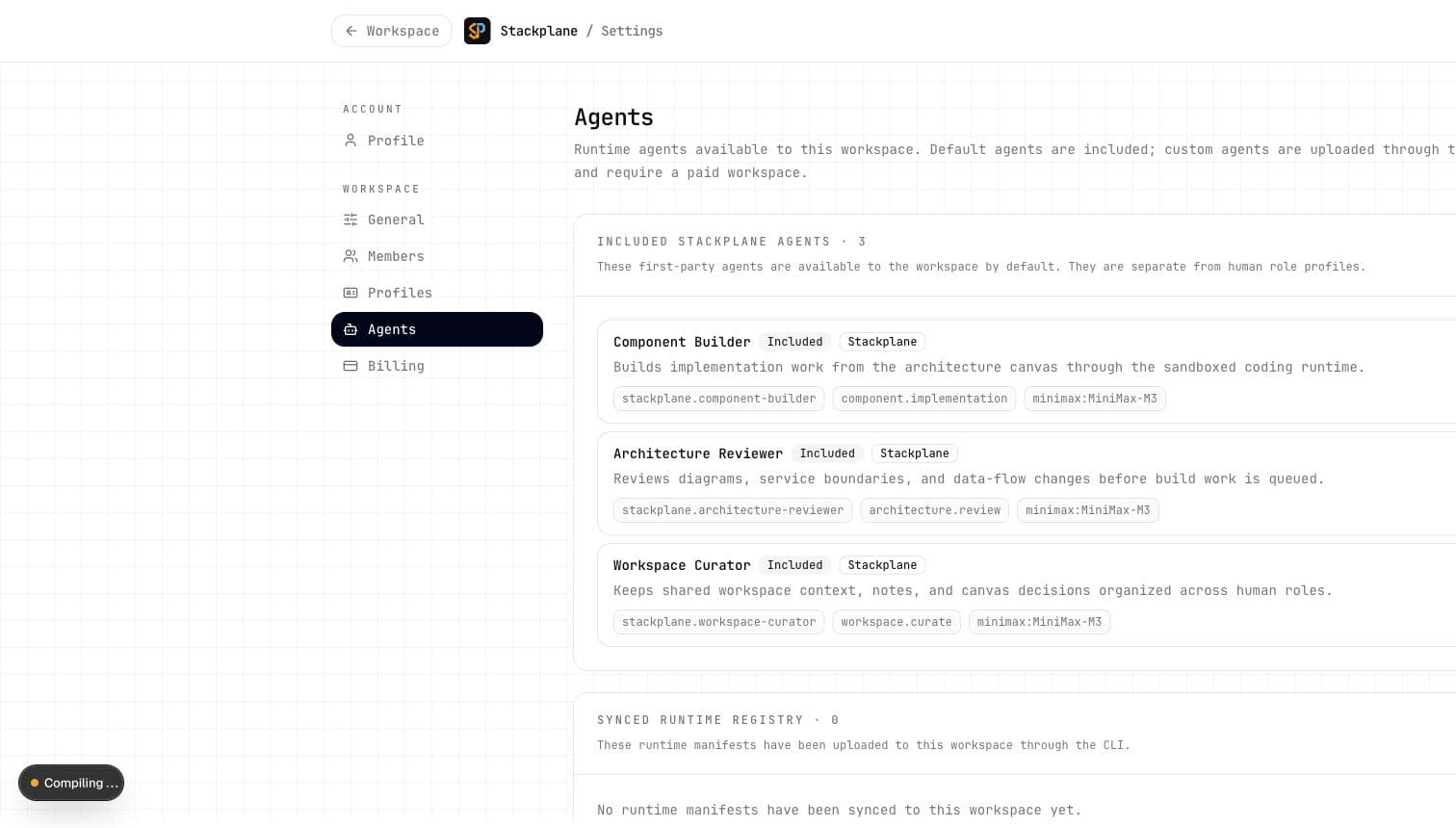
Capability-scoped agents are assigned to roles beside your engineers, governed by the workspace. You don't manage prompts — you staff and direct a team that works against the architecture.
One agent per role, paired to a human who stays responsible.
Each agent run is recorded with model, tokens, changes, and approvals. Engineering output becomes a governed, priced line item — output you can budget, decoupled from headcount.
Model, tokens, and changes on every run — auditable by design.
The lifecycle
The AI-driven development lifecycle runs on one plane: design the system, hand parts to the workforce, review the work, and ship. Design and a governed workforce are here today; the delivery loop is being built out on top of them.
01 · Design
Available today — the canvas and the control plane.
02 · Build & review
Governed agents and attribution, with the supervised build loop expanding.
03 · Ship
On the roadmap — closing the loop from architecture to delivery.
Give your agents a system to work against